

In the new industrial district of Mancasale, in Reggio Emilia, the headquarters of Motor Power Company take shape as a contemporary management and production hub dedicated to motion control technologies and industrial process automation.
Designed by Andrea Oliva Architetto, the building spans over 12,000 sqm and is constructed using environmentally sustainable materials, following bioclimatic design principles. Conceived as a human-centred, relational space, the project balances technology, sustainability and people’s wellbeing.
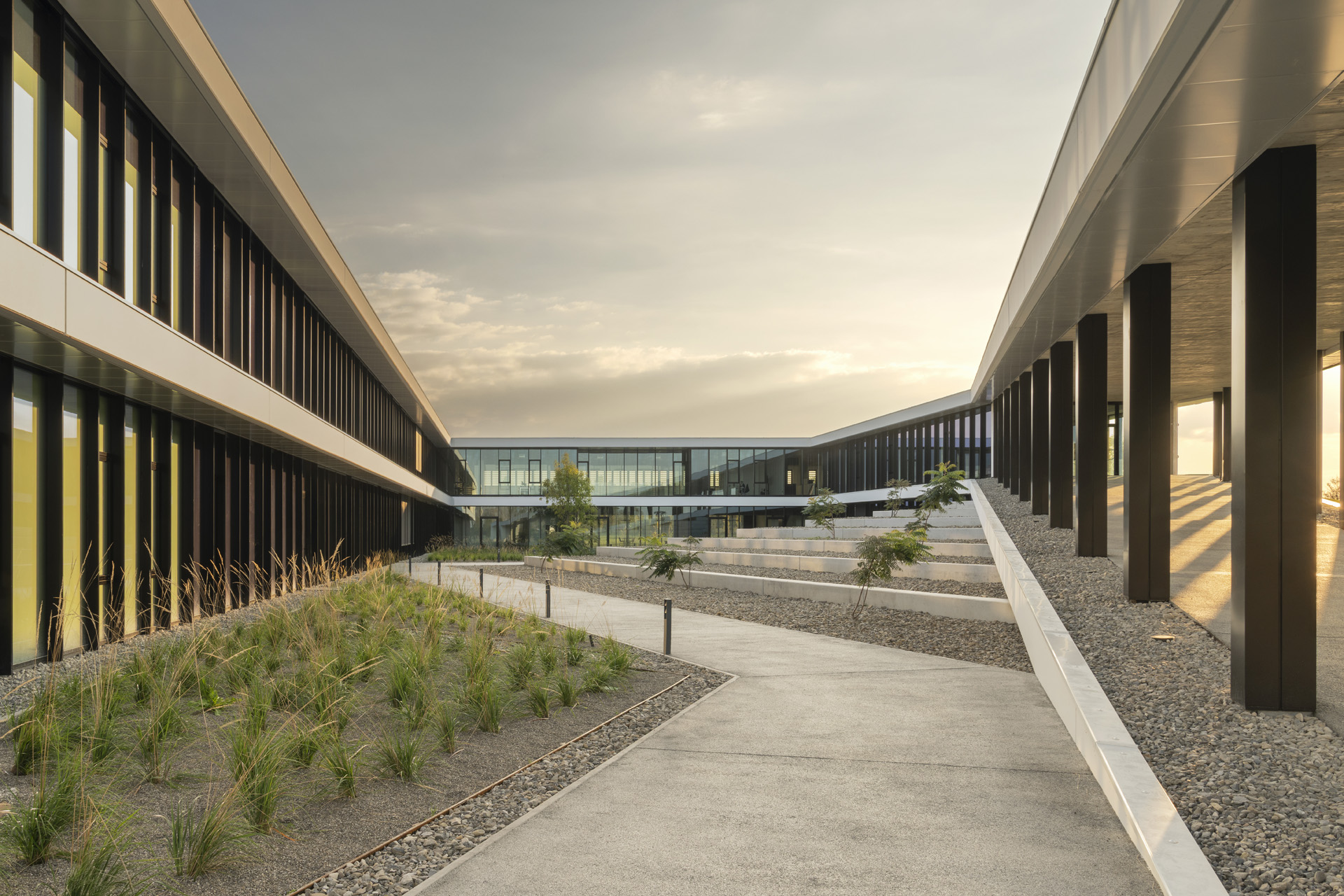
Workspaces are organised around transparent glazed surfaces that promote visual continuity and constant interaction between areas. Alongside operational functions, the headquarters include shared and multipurpose spaces such as a gym, a theatre and lounge areas, designed to encourage social interaction and a sense of community.
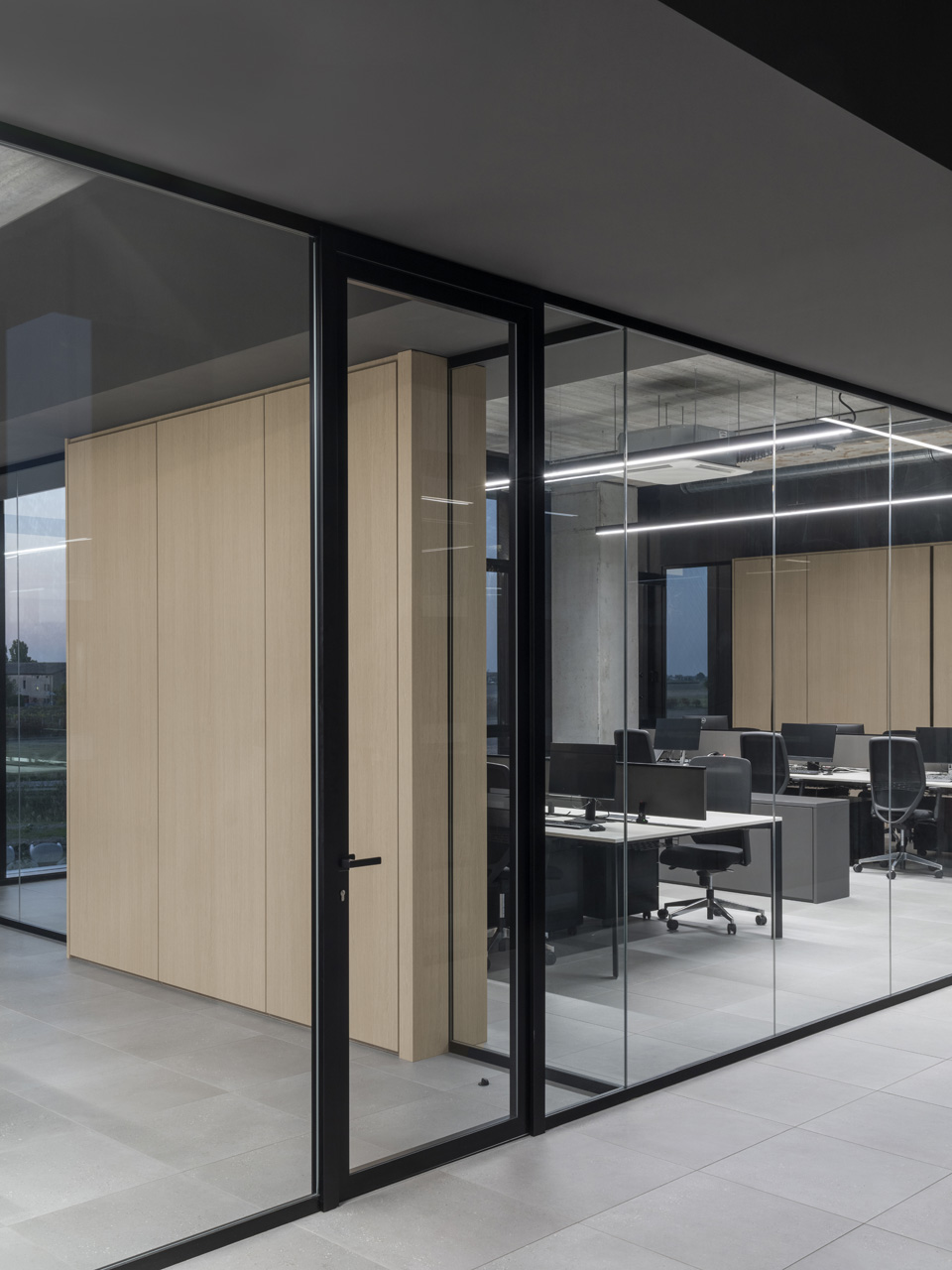
Within this strongly identity-driven architectural framework, Citterio was entrusted with the supply of furniture and partition systems, confirming its ability to interpret the vision of both architect and client while responding precisely to functional and aesthetic requirements.

Tailor-made and standard solutions in harmony with the project
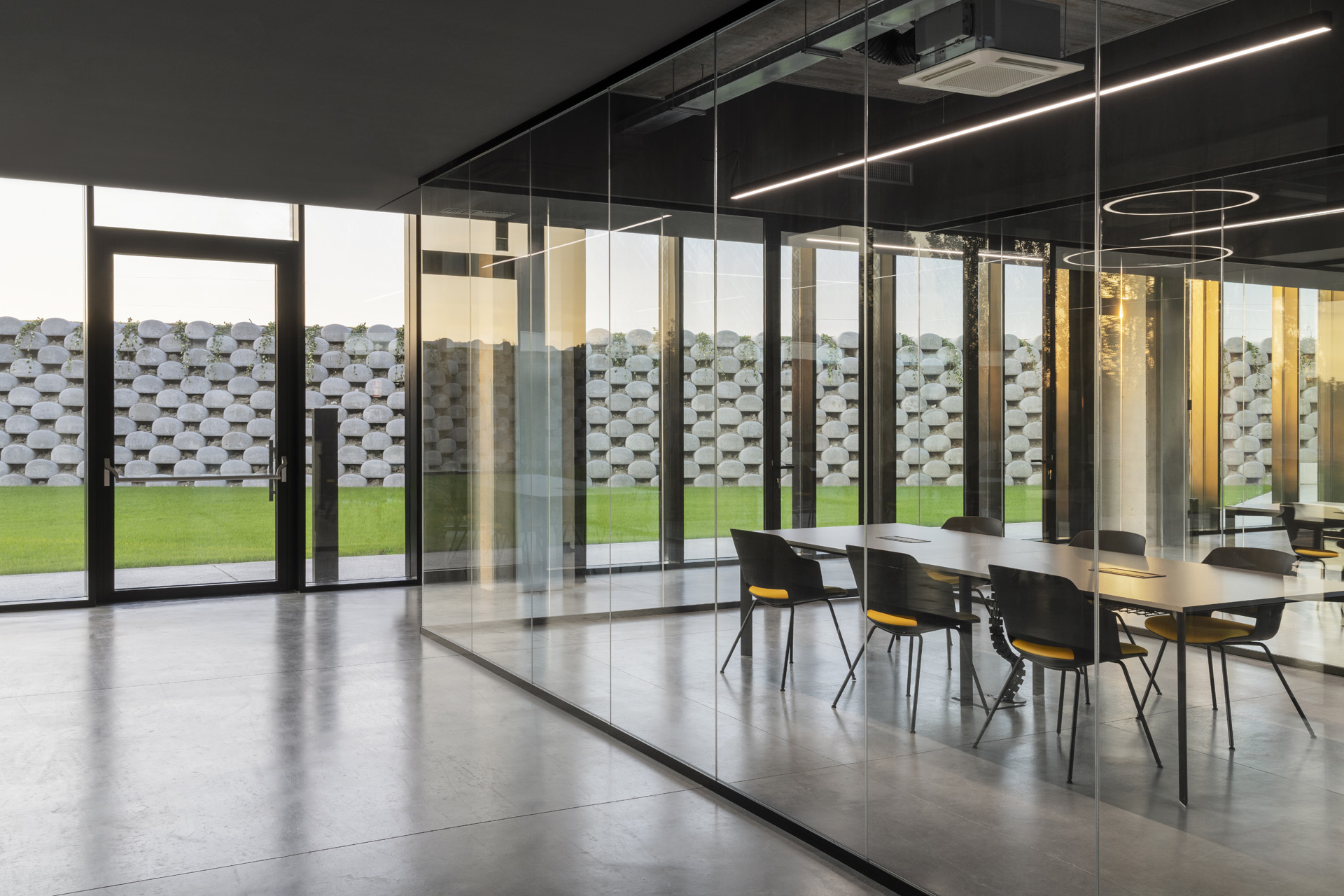
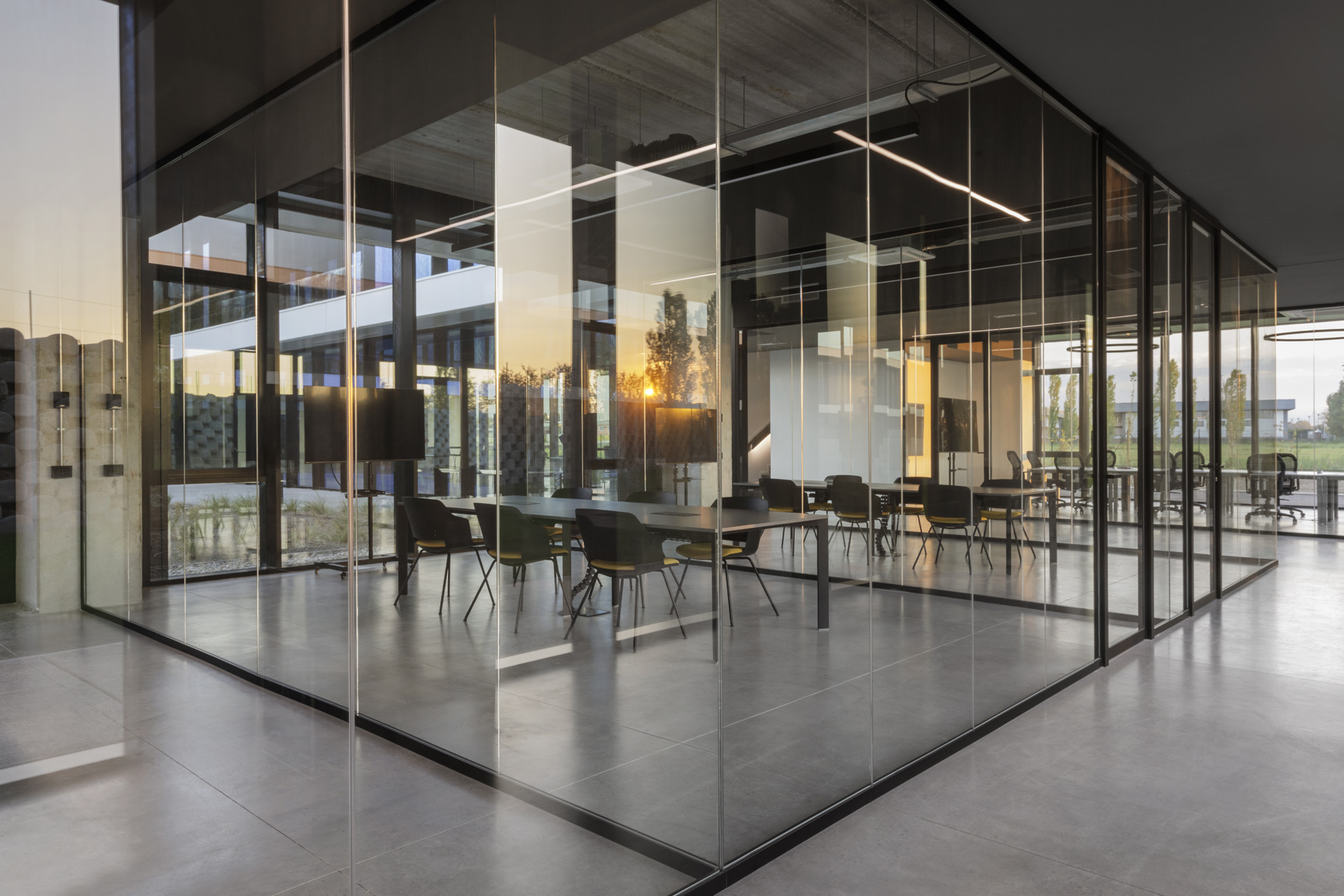
The interior fit-out combines standard systems with bespoke solutions developed specifically for the project, reflecting Citterio’s design approach based on functionality, construction quality and aesthetic coherence. The result is a series of clearly defined, harmonious environments, where materials, colours and proportions are carefully calibrated through a language of contrast and clarity.
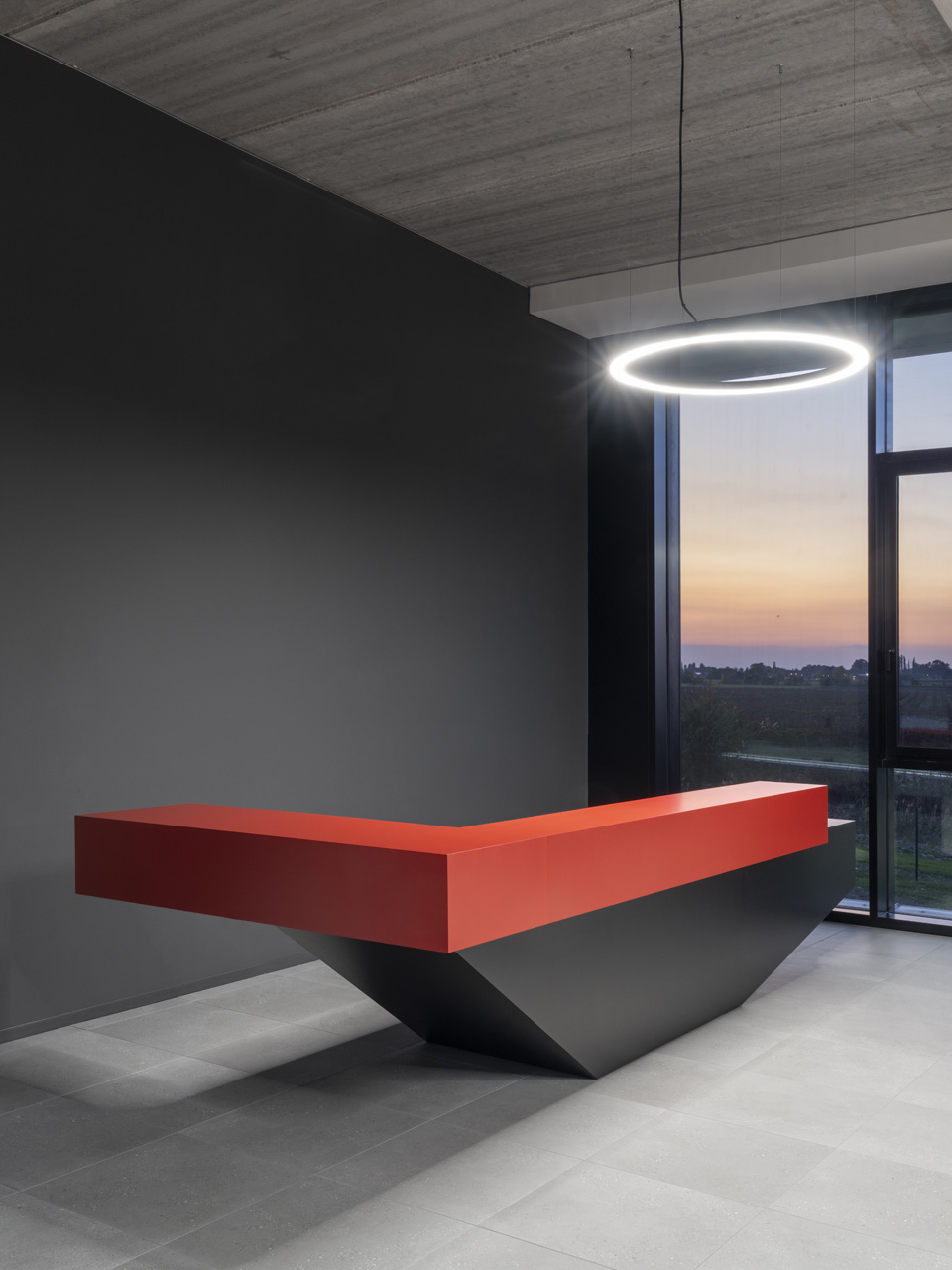
In the reception area, a custom-made element with a trapezoidal base and red lacquered top creates a bold, contemporary focal point that dialogues with the building’s architectural geometry. The break area, also designed to measure, adopts a more informal and welcoming character, conceived to support comfort and social interaction.
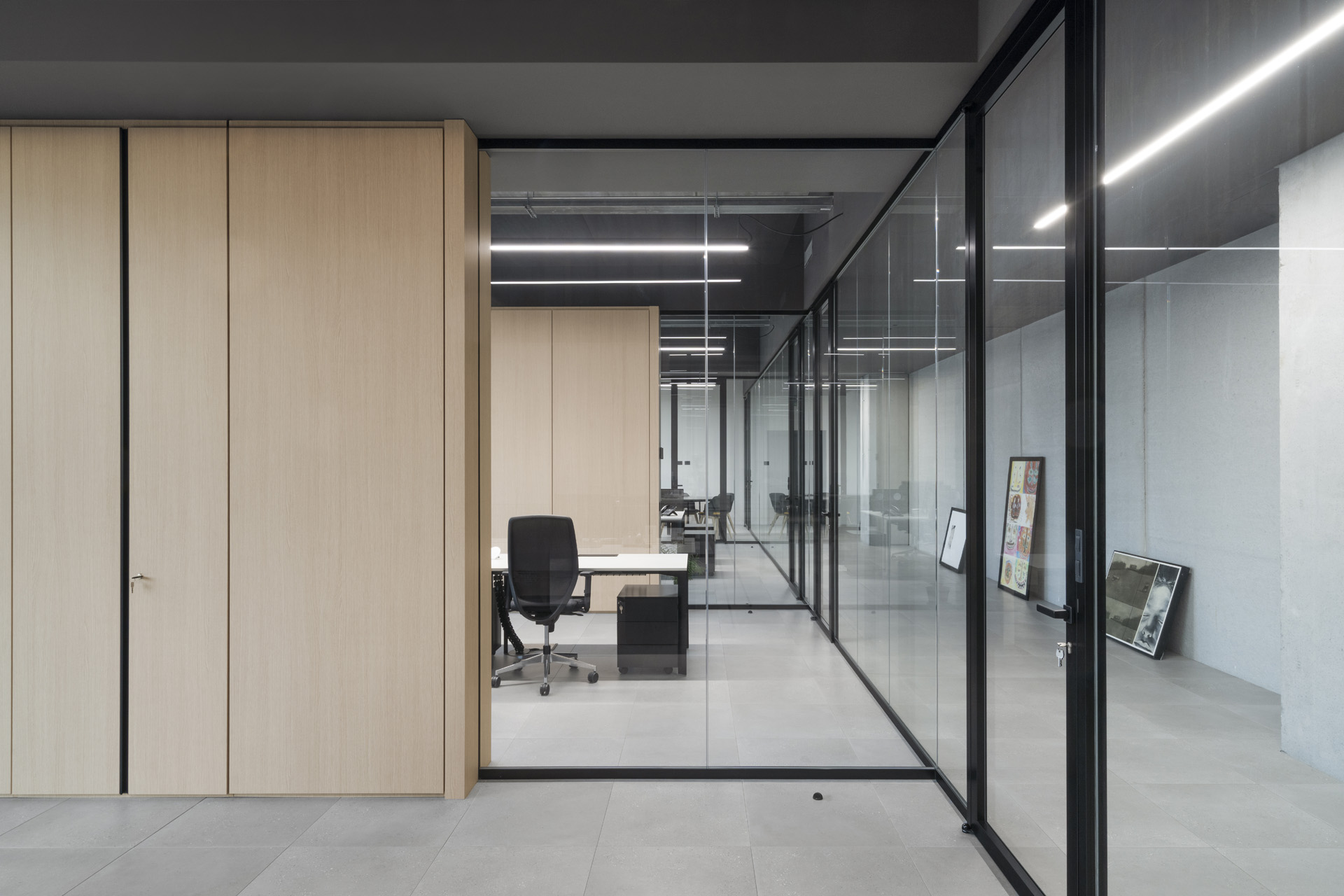
Basic glazed partition walls with black painted profiles define executive and operational areas on the ground and first floors. These ensure high acoustic performance while maintaining transparency and the continuity of natural light. Within these spaces, Programma 3 storage units in natural oak, customised with bespoke handles, are integrated into the partition system, expressing a hybrid relationship between furniture and architecture.
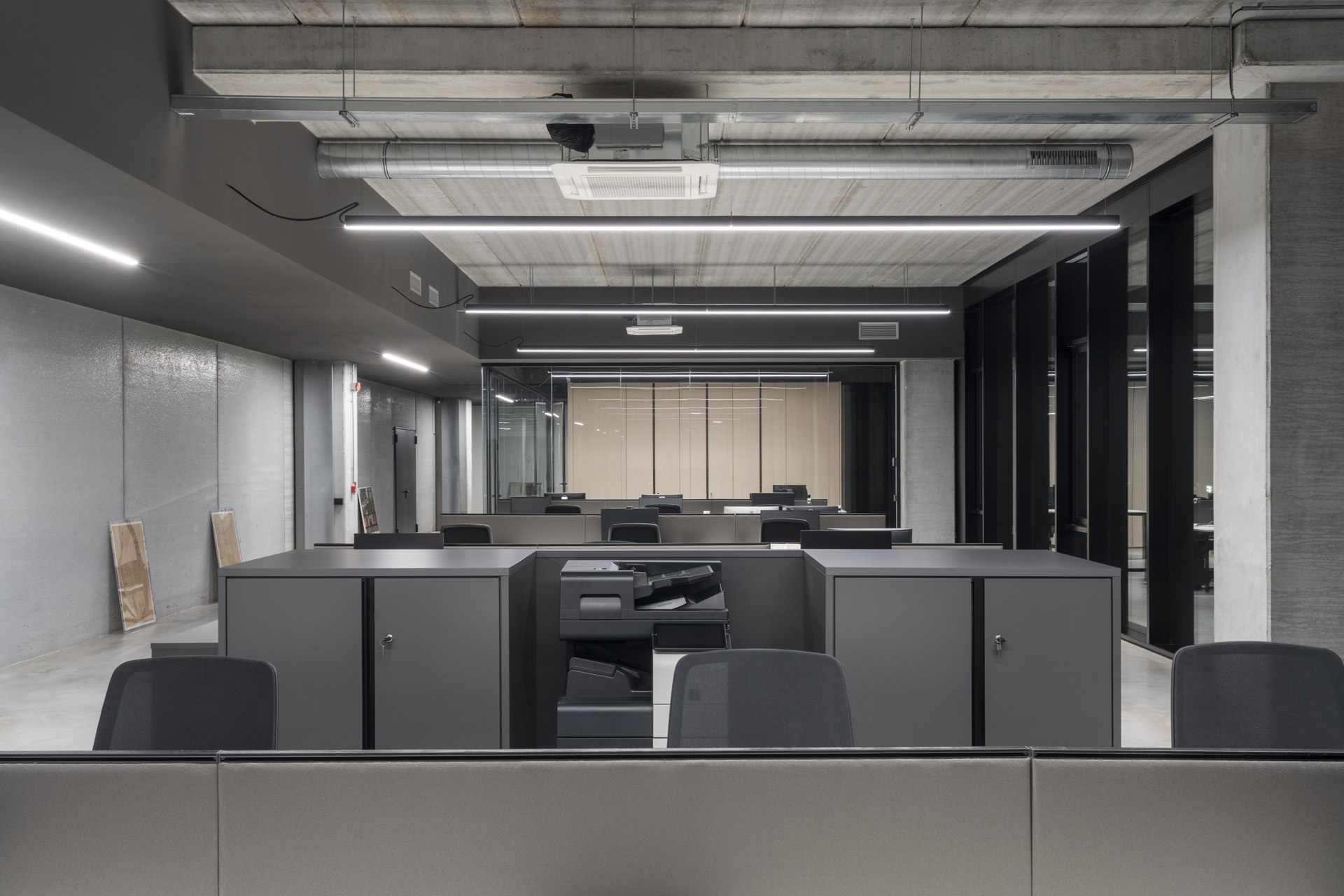
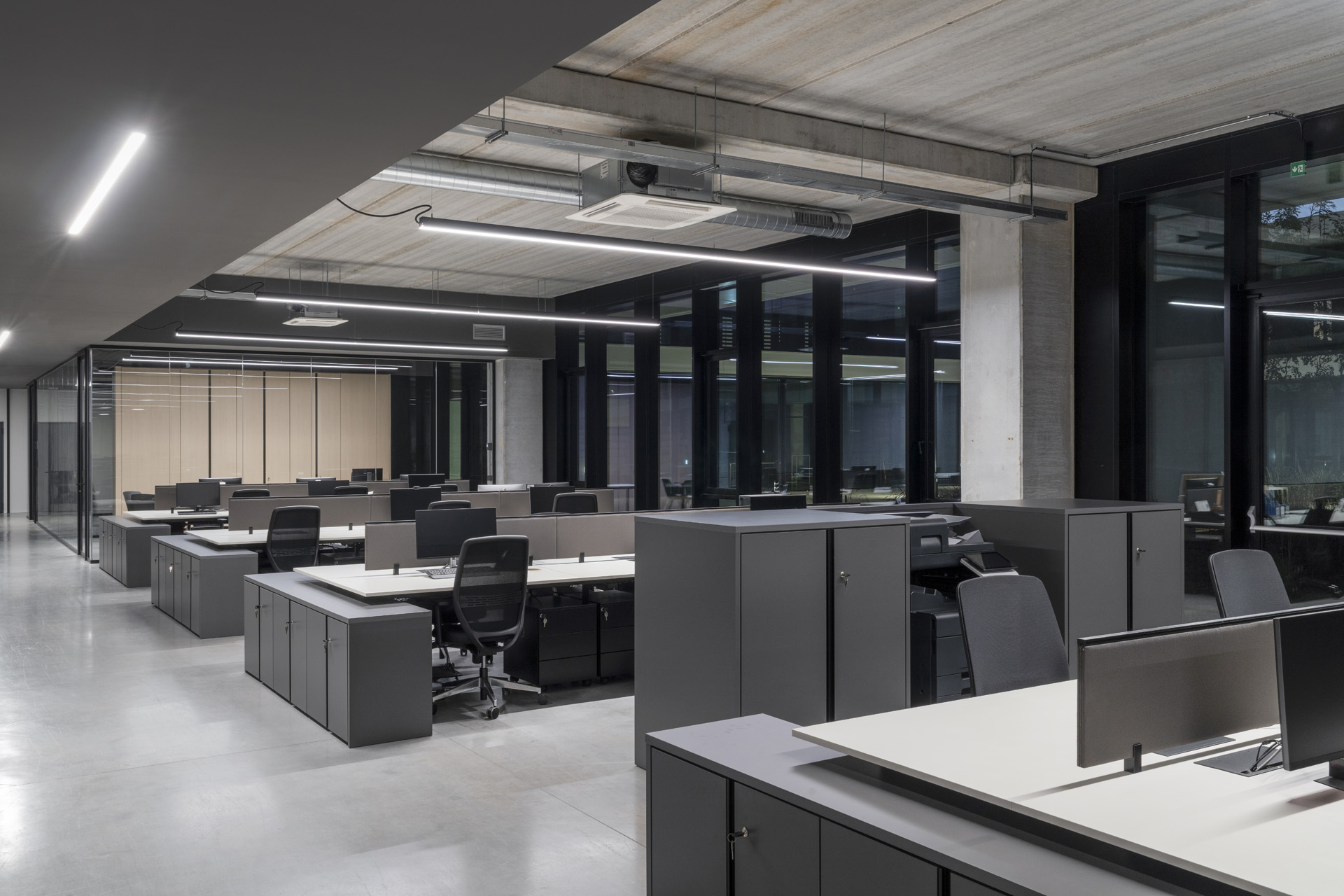
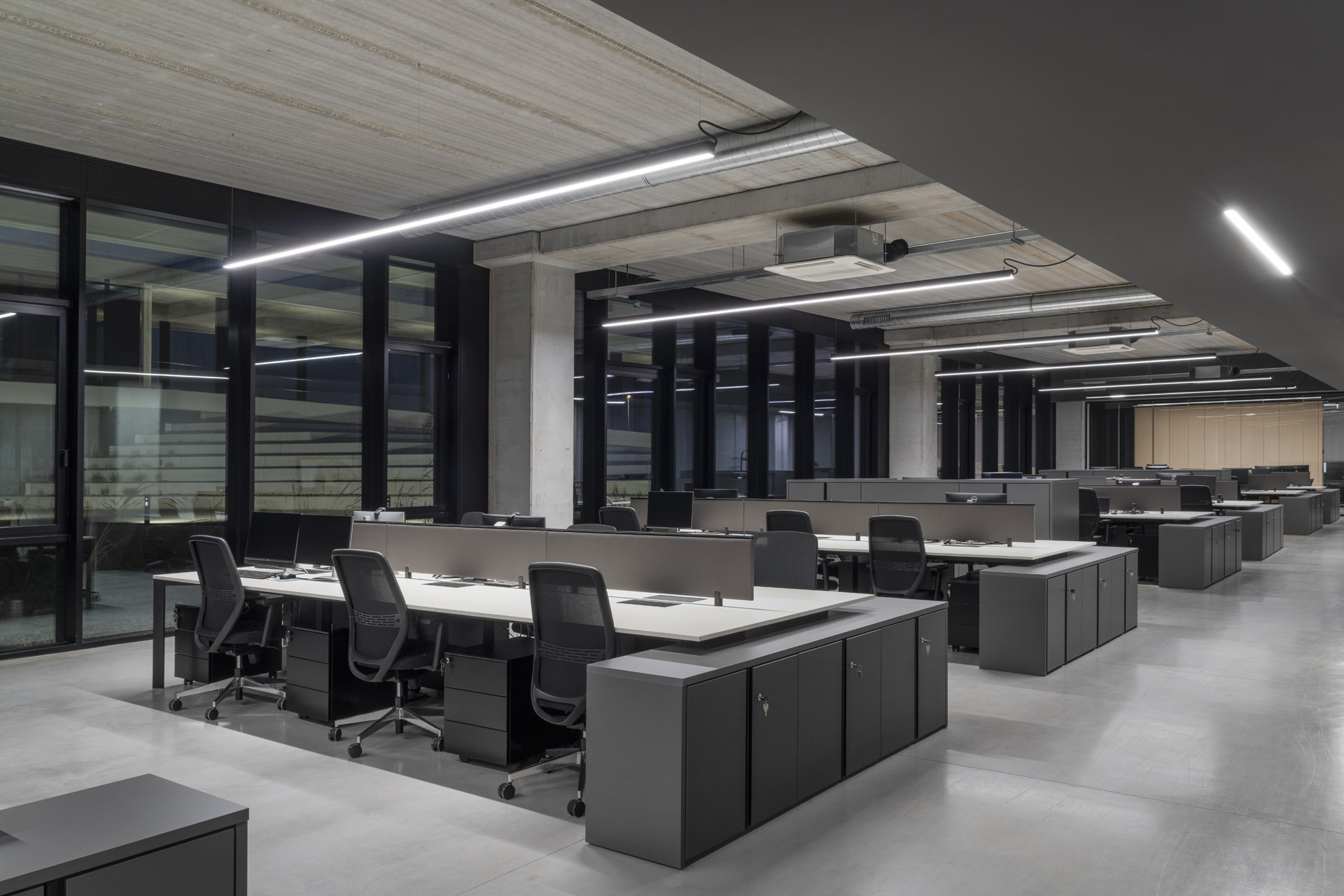
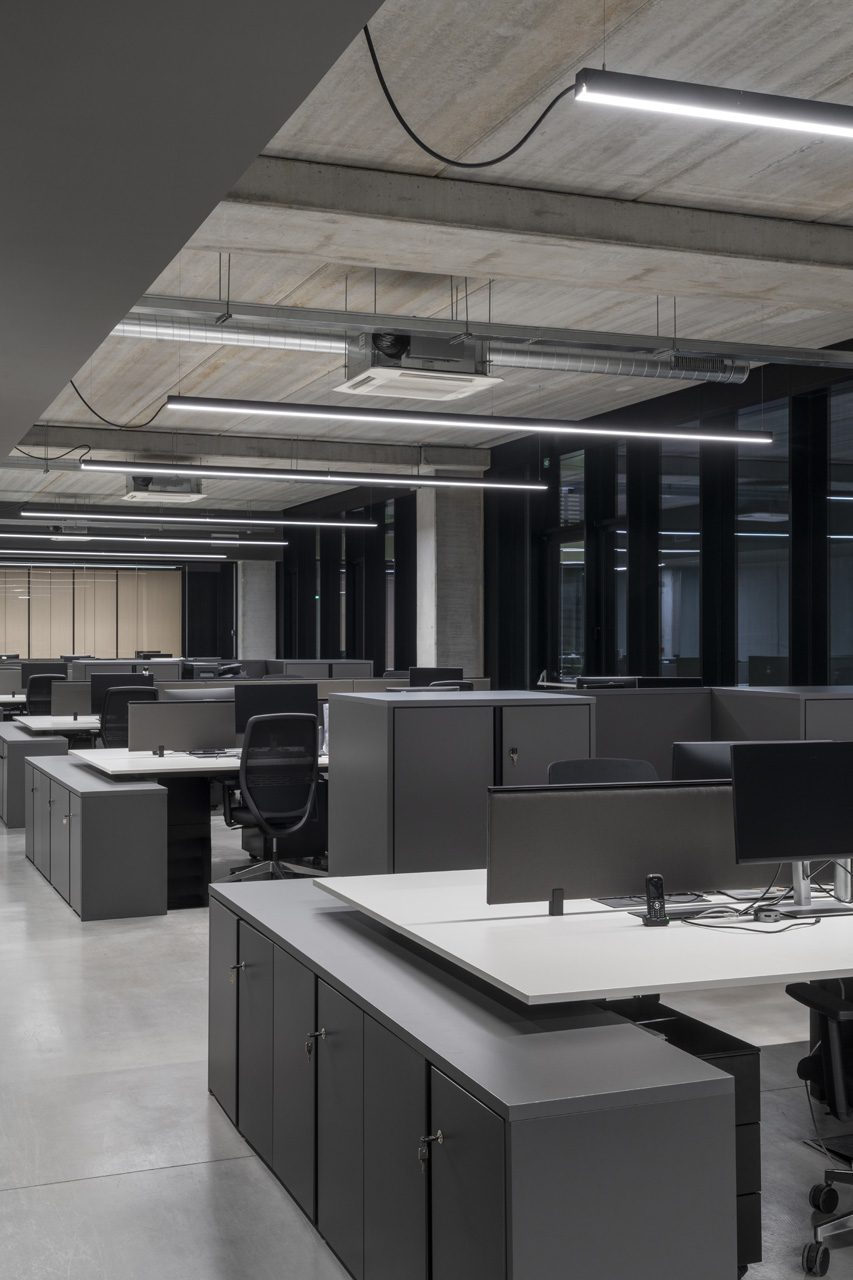
Shard workstations, selected for offices and meeting rooms, reinforce the project’s chromatic contrasts through the combination of white tops and black painted structures. Low Programma 3 cabinets function both as storage elements and as subtle dividers between workstations, contributing to a tidy and coherent overall layout.
Citterio as a design partner
This project highlights Citterio’s design and production flexibility and its ability to act as an active partner in interior architecture processes. By integrating adapted standard systems with fully customised elements, Citterio has contributed to shaping spaces that respond precisely to the functional, aesthetic and identity needs of both the client and the architectural vision.